

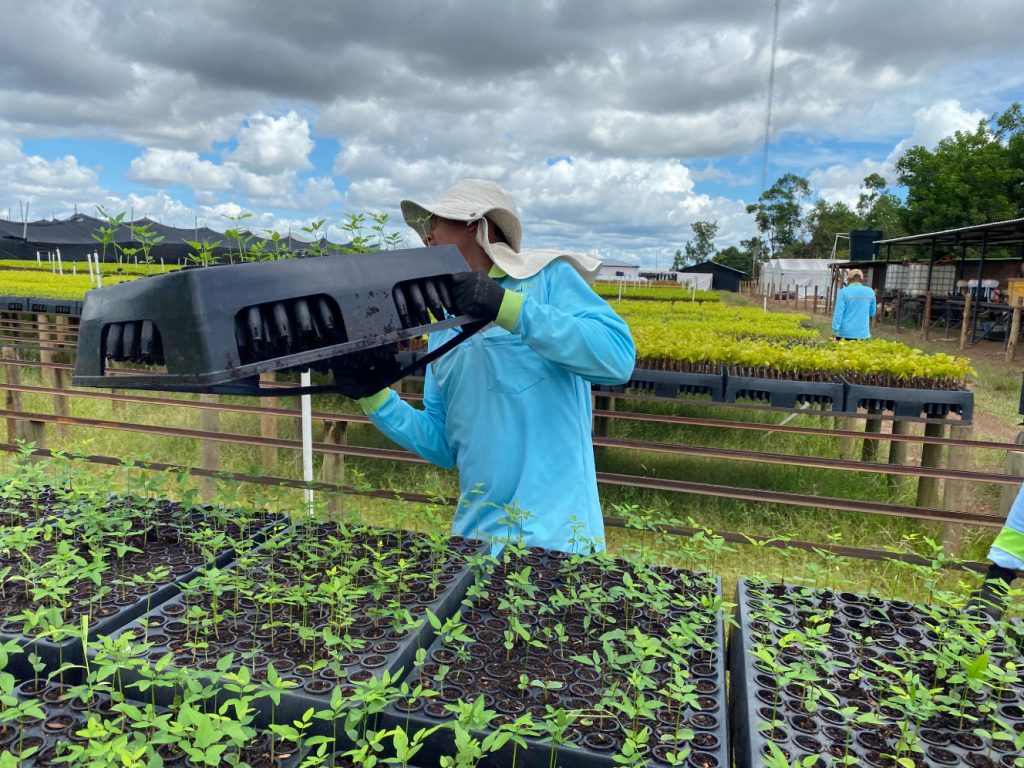
What are the best nursery trays for reforestation projects?
The best nursery trays for reforestation projects are reusable propagation systems designed to promote healthy root development, proper drainage, and efficient nursery management. Forestry trays, tube supports, and reusable propagation systems with root-guiding structures are ideal for producing stronger seedlings with higher field survival rates.
🌱 How to Choose the Best Nursery Trays for Reforestation Projects (USA & LATAM)
Reforestation projects in the United States and Latin America are growing rapidly due to increasing environmental restoration efforts, carbon capture initiatives, wildfire recovery programs, and sustainable forestry investments.
But successful reforestation does not begin in the field.
It begins inside the nursery.
Choosing the right nursery tray system can directly impact:
- Root development
- Seedling quality
- Survival rates
- Nursery efficiency
- Transportation and handling
Today, modern forestry nurseries are moving away from traditional plastic bags and adopting technical propagation systems specifically designed for native species, eucalyptus, pine, and restoration projects.
🌿 Why nursery tray selection matters in reforestation
In forestry propagation, root structure is critical.
Poor-quality containers often create:
- Root circling
- Weak root systems
- Uneven growth
- Lower adaptation after transplanting
This is especially problematic in:
- Native species restoration
- Eucalyptus plantations
- Large-scale forestry projects
- Ecological restoration programs
Modern nursery trays help guide root growth properly from the earliest stages.
🧩 Key factors when choosing nursery trays
1️⃣ Root development and root guidance
The best forestry nursery trays are designed to:
- Promote vertical root growth
- Prevent root circling
- Improve root aeration
- Enhance field adaptation
Root-guiding systems are essential for producing stronger seedlings capable of surviving harsh environmental conditions.
2️⃣ Durability and reusability
Large-scale projects require systems that can withstand:
- Constant handling
- Sun exposure
- Humidity
- Transportation
- Multiple production cycles
Reusable polypropylene trays provide:
- Longer lifespan
- Lower long-term costs
- Reduced waste generation
This is particularly important for sustainable forestry operations.
3️⃣ Proper drainage and aeration
Excess moisture can damage young seedlings.
Professional nursery trays should allow:
- Efficient water drainage
- Oxygen circulation
- Stable substrate conditions
This helps reduce disease pressure and improves root health.
4️⃣ Nursery organization and scalability
Technical tray systems allow nurseries to:
- Organize production more efficiently
- Standardize seedling growth
- Improve transportation logistics
- Scale operations more easily
This becomes critical in high-volume reforestation programs.
🌳 Nursery systems commonly used in reforestation projects
Forestry propagation trays
Ideal for:
- Seed germination
- Early-stage development
- Native species propagation
- Eucalyptus production
These trays help maintain uniformity and maximize nursery space.
Tube support systems
Widely used for:
- Forestry tubes
- Deep root development
- High-survival seedlings
Especially recommended for:
- Pine
- Eucalyptus
- Native species
Reusable EllePot support systems
Modern support systems like reusable tray supports allow:
- Better organization
- Improved handling
- Sustainable propagation
- Reduced plastic waste
These systems are becoming increasingly popular in ecological restoration projects across the USA and LATAM.
📊 Nursery trays vs traditional plastic bags
| Feature | Technical Nursery Trays | Plastic Bags |
|---|---|---|
| Root development | Controlled | Poor |
| Reusability | Yes | No |
| Nursery organization | High | Limited |
| Sustainability | Better | Lower |
| Production efficiency | High | Variable |
🌎 Reforestation trends in USA & LATAM
Modern reforestation projects are prioritizing:
- Sustainable propagation systems
- Reusable nursery infrastructure
- Better field survival rates
- Reduced environmental impact
This is driving demand for:
- Technical nursery trays
- Root-guiding containers
- Durable propagation systems
Both governmental and private restoration programs increasingly require scalable nursery solutions.
🌱 Best nursery trays for native species and ecological restoration
Native species often require:
- More sensitive root management
- Better moisture balance
- Longer nursery cycles
For these projects, reusable technical trays and root-guided systems provide superior performance compared to traditional methods.
✅ Conclusion
Choosing the right nursery trays for reforestation projects is not just about holding seedlings.
It is about:
- Building stronger root systems
- Improving field performance
- Reducing operational costs
- Supporting long-term sustainability
Modern forestry nurseries in the USA and LATAM are adopting reusable technical propagation systems because they deliver better results from the nursery to the field.
Successful reforestation starts from the root.
📞 Contact Us
At Termoformados Antioquia, we manufacture reusable propagation systems for forestry nurseries and reforestation projects:
🌱 Forestry nursery trays
🌿 Tube support systems
🌳 Reusable EllePot support trays
♻️ Durable polypropylene systems
📦 International availability
Contact us today and optimize your reforestation nursery operations.
🔥
What is the best propagation system for reforestation projects?
The best propagation systems for reforestation projects are reusable nursery trays and root-guiding containers that improve root development, increase survival rates, and reduce operational waste in forestry nurseries.
🚀
Next recommended steps:
👉 Create product interlinking
👉 Add downloadable technical PDFs
👉 Build English landing pages
👉 Add real nursery project photos/videos
Testimonios de Nuestros Clientes
«Las bandejas de Termoformados Antioquia han transformado nuestros cultivos forestales. La calidad y durabilidad son inigualables.»
– Ingeniero forestal, Honduras.
«Gracias a sus bandejas hemos optimizado la germinación y reducido el desperdicio de sustrato. Excelente calidad.»